
Qualification :- B.A.M.S
MMC No. – I-64912-A

Piles, medically known as haemorrhoids, are swollen vascular tissues around the anus and lower rectum. They may cause bleeding during bowel movements, itching, discomfort or swelling. Agnikarma is a traditional Ayurvedic para-surgical procedure involving the controlled application of heat to selected tissues. It is mentioned in Ayurvedic literature and treatment guidance for Arsha, the traditional term associated with piles. However, its role, clinical effectiveness and safety need to be understood separately from established modern medical treatments.
Agnikarma is a traditional Ayurvedic procedure in which heat is applied to selected tissues using a specialised instrument and technique.
In Ayurveda, it is classified as a para-surgical procedure. It is traditionally described in the management of certain conditions, including Arsha.
The procedure should not be confused with ordinary heat application or conventional surgical techniques. Its application depends on the traditional method being followed and the practitioner’s assessment.
The Ministry of AYUSH’s Ayurvedic Standard Treatment Guidelines (2017) include Agnikarma among the treatment options for selected cases of Arsha. However, inclusion in a traditional treatment guideline does not independently establish clinical effectiveness, complication rates or equivalence to modern haemorrhoid procedures.
Haemorrhoids are enlarged vascular cushions in the anal canal and lower rectum. They are generally classified into two types:
Internal haemorrhoids: These develop inside the rectum and may cause painless bleeding during bowel movements. In some cases, they protrude through the anal opening, a condition called prolapse.
External haemorrhoids: These develop beneath the skin around the anus and may cause itching, swelling and discomfort. A blood clot can sometimes form inside an external haemorrhoid, causing sudden pain.
Common factors associated with piles include:
Rectal bleeding should not automatically be attributed to piles. Anal fissures, inflammatory bowel disease and colorectal conditions can cause similar symptoms.
In traditional Ayurvedic practice, Agnikarma may be considered for selected cases of Arsha.
The procedure involves applying controlled heat to a selected area using a specific technique. The exact method depends on the Ayurvedic approach and clinical assessment.
However, patients should understand that evidence supporting Agnikarma specifically for haemorrhoids remains limited. Its effectiveness, long-term outcomes and complication rates have not been established to the same standard as commonly studied modern haemorrhoid treatments.
It should therefore not be assumed to be suitable for every patient or used as a replacement for appropriate medical evaluation.
There is no universal recommendation that Agnikarma is appropriate for everyone with piles.
Treatment decisions should consider:
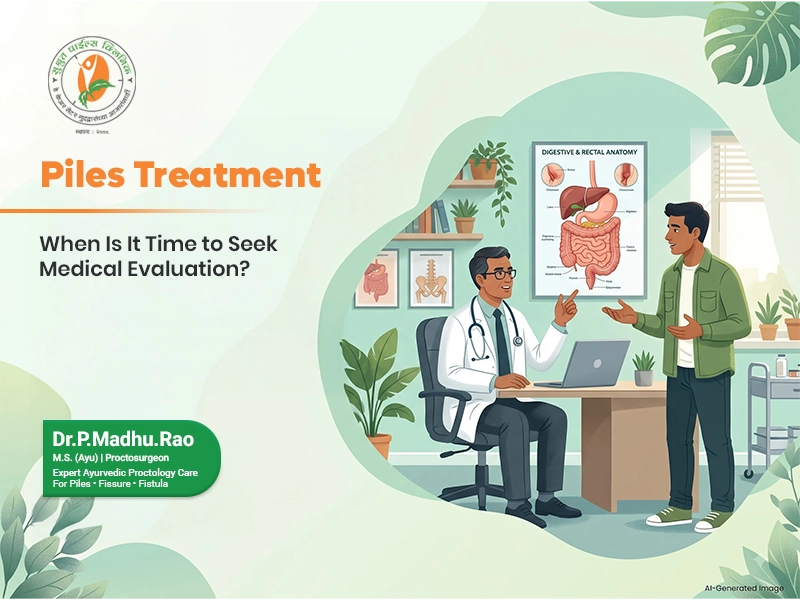
A proper examination is important before considering any procedure. Patients with significant bleeding, severe pain or suspected complications may require evaluation by an appropriate medical specialist.
The preparation, instruments and application technique may differ according to the traditional practice followed.
Before considering Agnikarma, patients should receive clear information about:
Because Agnikarma involves heat application, local tissue injury is an important potential concern. The specific risks and recovery expectations for its use in haemorrhoids are not sufficiently established through high-quality clinical evidence.
Any worsening pain, fever, unusual discharge or significant bleeding after a procedure requires prompt medical assessment.
Diagnosis generally involves reviewing symptoms, medical history and bowel habits.
A healthcare professional may recommend:
These examinations help distinguish haemorrhoids from other anorectal and intestinal conditions.
Treatment depends on the type, severity and symptoms of haemorrhoids.
For mild symptoms, conservative measures may include:
If symptoms persist, established medical treatments may include rubber band ligation, sclerotherapy or infrared coagulation.
More advanced or persistent haemorrhoids may require surgical treatment.
The appropriate option should be discussed with a qualified healthcare professional after examination.
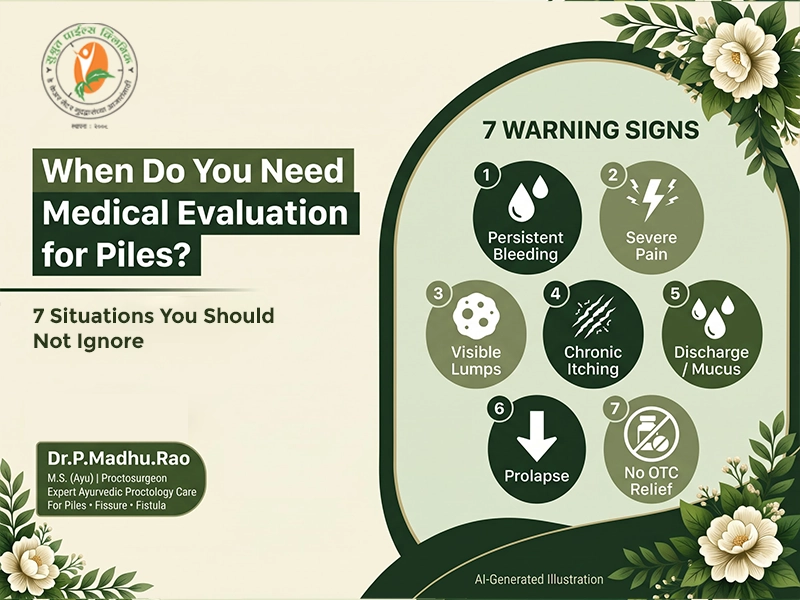
Seek medical assessment if you experience:
Seek urgent medical attention for heavy or continuous bleeding, severe pain, black or dark-red stools, fever with anal pain, dizziness or fainting.
Rectal bleeding should never automatically be assumed to be caused by piles.
Agnikarma is a traditional Ayurvedic procedure mentioned in the management of Arsha, or piles. However, its clinical effectiveness, long-term outcomes and safety require careful consideration because evidence specific to haemorrhoids remains limited. Patients should understand the potential risks and available alternatives before considering the procedure. Proper diagnosis is essential, particularly when rectal bleeding or persistent pain is present.
Agnikarma is a traditional Ayurvedic para-surgical procedure involving the application of controlled heat to selected tissues. Its use depends on the condition and individual assessment.
Yes. Agnikarma is included among the traditional treatment options for Arsha in the Ayurvedic Standard Treatment Guidelines. This does not establish its effectiveness or safety for every case.
The experience may vary depending on the technique and treatment area. Discomfort, burns and tissue injury are possible concerns that should be discussed before the procedure.
No permanent outcome can be guaranteed. Haemorrhoids may recur, and long-term results depend on several individual factors and bowel habits.
Depending on the condition, options include dietary and lifestyle changes, rubber band ligation, sclerotherapy, infrared coagulation and surgery. A medical assessment helps determine appropriate options.
This article is intended for general educational purposes only and does not constitute medical advice, diagnosis, or treatment recommendations. Symptoms and treatment requirements vary between individuals. Consult a qualified healthcare professional for an appropriate examination and personalised guidance. Do not attempt to drain an abscess yourself or delay medical attention for worsening pain, swelling, or fever.
Agnikarma is a traditional Ayurvedic therapy that may have a role in selected cases of piles following proper evaluation. Understanding the diagnosis, treatment goals, potential benefits, limitations, and alternative options is important before choosing any procedure.
Sushrut Surgical Hospital, Old Sangavi provides consultation and treatment guidance for piles and other anorectal conditions, helping patients understand suitable Ayurvedic and other treatment approaches based on their individual needs.
Contact Sushrut Surgical Hospital for consultation and personalized guidance regarding Agnikarma for piles in Old Sangavi.
📍 Location: Old Sangavi, Pune
M.K.Chowk, above HDFC Bank, Kawade Nagar, Trimurti Colony, Pimple Gurav, Pimpri-Chinchwad, Pune, Maharashtra 411027
Ganpati chowk,Shitole Nagar, Old Sangavi,Pune - 411027.
Shop No. 19-20, Silver Central Mall, Jadhav Wadi, Moshi, Pune-412105
Eleifend senectus ornare hendrerit dis lacinia habitant mattis