
Qualification :- B.A.M.S
MMC No. – I-64912-A
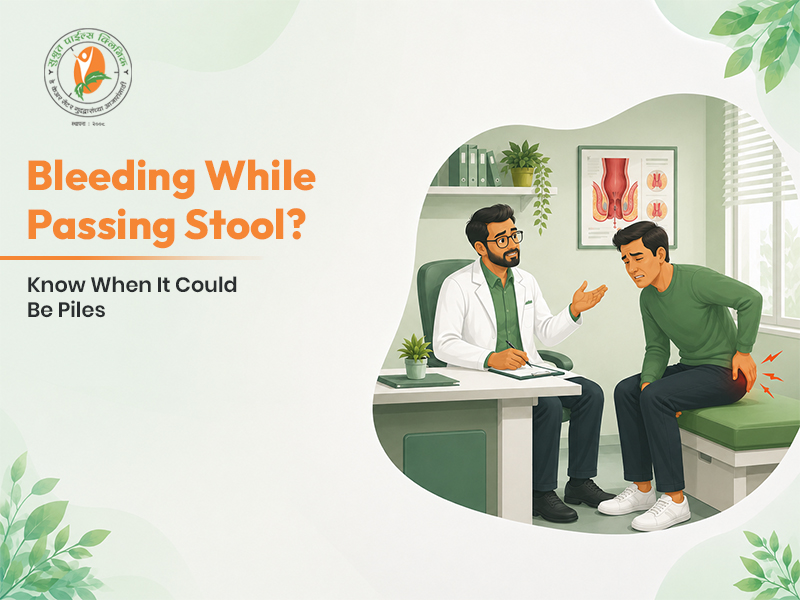
Seeing blood while passing stool can be worrying, especially when it happens unexpectedly. One common cause of rectal bleeding is piles, also known as hemorrhoids. Piles can cause bright-red bleeding during or after a bowel movement, particularly when you are constipated or strain while passing stool.
However, not every episode of bleeding is caused by piles.
Bleeding while passing stool can also occur due to an anal fissure, fistula, infection, or other digestive conditions. This is why repeated or unexplained bleeding should not simply be assumed to be hemorrhoids.
If piles are confirmed as the cause, appropriate piles treatment in Moshi can help manage symptoms and reduce the chances of recurring problems.
Piles are swollen blood vessels and supporting tissues in and around the anal canal. They are commonly classified as internal hemorrhoids or external hemorrhoids.
Internal piles develop inside the anal canal and commonly cause bright-red bleeding during or after bowel movements. They may also cause itching, mucus discharge, a feeling of incomplete bowel emptying, or tissue coming out of the anus.
External piles develop under the skin around the anus and may cause a lump, swelling, tenderness, or pain.
Piles can be mild at first but may become troublesome when they enlarge, prolapse, or repeatedly become irritated.
Bleeding caused by piles is often bright red. You may notice blood:
Internal hemorrhoids can bleed without significant pain. However, the colour of the blood alone cannot confirm that piles are the cause.
If bleeding continues, returns frequently, or becomes heavier, it is important to consult a doctor.
Piles can become swollen and irritated when there is repeated pressure around the anal canal. Common factors that can contribute include:
When swollen hemorrhoidal tissue is irritated as stool passes, it can bleed.
Eating enough fibre, drinking adequate fluids, avoiding excessive straining, and managing constipation can help reduce hemorrhoidal symptoms.
Yes.
An anal fissure is a small tear in the anal lining that can cause bright-red bleeding, often accompanied by sharp or burning pain during and after bowel movements.
Other conditions, including fistulas, infections, inflammatory bowel conditions, polyps, and other digestive problems, can also cause rectal bleeding.
This is why you should not automatically assume that every episode of blood in the stool is caused by piles. A doctor can assess your symptoms and determine the likely cause.
You should consider seeing a doctor if:
A consultation does not automatically mean surgery. The purpose is to identify the cause and determine which treatment is appropriate.
Yes. Many people with mild piles can improve with conservative treatment.
Depending on the condition, management may include:
Some patients with persistent symptoms may benefit from office-based or minimally invasive procedures.
Surgery may be considered for selected patients with large, significantly prolapsed, or persistent hemorrhoids that do not respond adequately to other treatments.
The appropriate treatment depends on the type and severity of piles and the patient’s symptoms.
Simple lifestyle changes can help reduce irritation and prevent symptoms from becoming worse.
Include fibre-rich foods such as fruits, vegetables, whole grains, and legumes to help make stools softer and easier to pass.
Adequate fluid intake can support softer stools and work alongside a fibre-rich diet.
Try not to force bowel movements. Excessive straining can increase pressure on hemorrhoidal tissues.
Hard stools and repeated constipation can contribute to recurring piles. Maintaining regular bowel habits is an important part of long-term management.
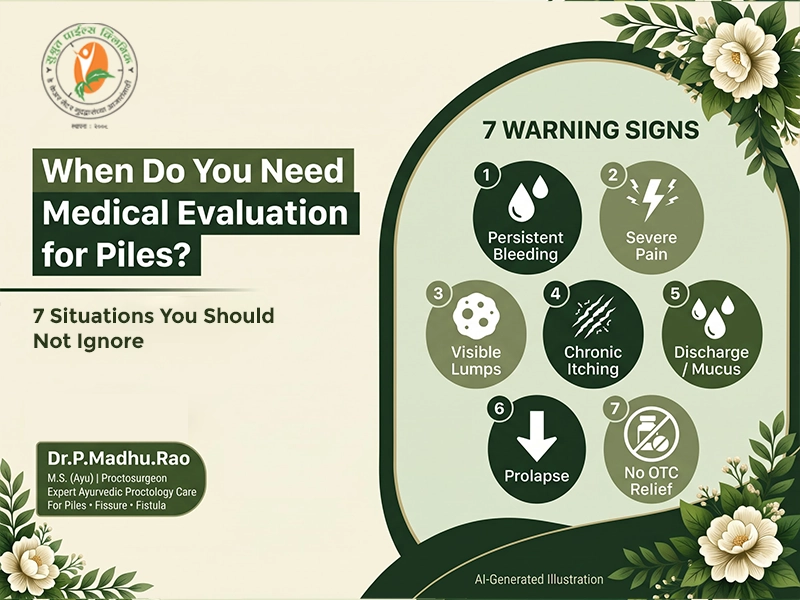
Seek medical attention promptly if you experience:
These symptoms may indicate a condition that needs medical assessment rather than routine treatment for piles.
At Sushrut Piles Clinic, patients can discuss concerns such as bleeding while passing stool, recurrent piles, constipation, prolapse, anal pain, and swelling.
The first step is to understand the symptoms and identify the likely cause. Depending on the diagnosis and severity, piles treatment in Moshi may involve dietary and lifestyle changes, medicines, minimally invasive procedures, or surgery for selected cases.
The goal is to choose treatment according to the patient’s condition rather than assuming that everyone requires the same procedure.
Bleeding while passing stool can be a symptom of piles, particularly when the blood is bright red and appears during or after a bowel movement. However, piles are not the only possible cause of rectal bleeding.
If bleeding keeps returning, becomes heavier, or occurs with pain, swelling, prolapse, fever, or other concerning symptoms, seek medical evaluation.
If piles are confirmed, piles treatment in Moshi does not necessarily mean surgery. Depending on your condition, lifestyle changes, medicines, minimally invasive procedures, or surgery may be considered.
Getting the correct diagnosis is the first step toward choosing the right treatment.
This article is intended solely for general health education and public awareness. It does not constitute medical advice, diagnosis or treatment recommendations. Symptoms and treatment requirements vary between individuals. Consult a qualified healthcare professional for appropriate clinical assessment and personalised medical guidance. Seek urgent medical attention for heavy bleeding, fainting, severe pain or fever accompanied by increasing anal swelling.
No. Bright-red blood can occur with piles, but it can also be caused by an anal fissure and other conditions. Persistent or unexplained bleeding should be evaluated.
Yes. Hard stools and straining can irritate hemorrhoids and may also contribute to an anal fissure.
No. Many patients can manage piles without surgery. Treatment depends on the severity of the condition and individual symptoms.
Yes. Piles can recur, particularly when constipation, hard stools, and excessive straining continue. Healthy bowel habits can help reduce recurrence.
M.K.Chowk, above HDFC Bank, Kawade Nagar, Trimurti Colony, Pimple Gurav, Pimpri-Chinchwad, Pune, Maharashtra 411027
Ganpati chowk,Shitole Nagar, Old Sangavi,Pune - 411027.
Shop No. 19-20, Silver Central Mall, Jadhav Wadi, Moshi, Pune-412105
Eleifend senectus ornare hendrerit dis lacinia habitant mattis