
Qualification :- B.A.M.S
MMC No. – I-64912-A

Proctology is the branch of medicine concerned with conditions affecting the anus, rectum, and surrounding areas. These conditions include piles (hemorrhoids), anal fissures, and anal fistulas.
Laser-based procedures are among the techniques used in modern proctology for selected anorectal conditions. Some patients explore these options because they are interested in minimally invasive approaches and want to understand the possible recovery requirements.
However, laser treatment is not suitable for every patient. The appropriate approach depends on the diagnosis, severity of symptoms, medical history, previous treatment, and clinical findings.
Understanding the different conditions and available treatment options can help patients make informed decisions about their healthcare.
Laser proctology refers to the use of laser technology in selected procedures involving the anus and rectum.
Depending on the condition, laser energy may be used to treat affected tissue or as part of a minimally invasive intervention.
Different anorectal conditions require different techniques. For example, a laser procedure used for selected hemorrhoids is not necessarily the same as one used for an anal fistula.
The term laser treatment therefore does not describe one universal procedure. An accurate diagnosis should always come before treatment selection.
No. Not every patient with an anorectal condition requires a procedure, and not everyone who needs an intervention is suitable for laser treatment.
Treatment selection may depend on:
Some patients may improve with dietary changes, medication, and appropriate bowel management. Others may require an office-based procedure or surgery.
Laser-based treatment may be considered in selected cases after an appropriate clinical assessment.
Piles, medically known as hemorrhoids, are swollen blood vessels and supporting tissues in and around the anus and lower rectum.
They are generally classified as internal or external hemorrhoids.
Internal hemorrhoids may cause bleeding or tissue protruding through the anal opening. External hemorrhoids may cause itching, swelling, and discomfort. A blood clot within an external hemorrhoid can sometimes cause sudden, significant pain.
Laser-based procedures may be considered for selected patients depending on the type and characteristics of their hemorrhoids.
A medical assessment may consider:
Mild hemorrhoid symptoms may improve with dietary fibre, adequate hydration, and better bowel habits. Patients with persistent or advanced symptoms may require further intervention.
Laser treatment should be considered one possible option rather than a universal solution for piles.
An anal fissure is a small tear in the lining of the anal canal. It commonly causes sharp pain during bowel movements, which may continue afterwards. Some patients also notice small amounts of bright red blood.
Fissures can be acute (recently developed) or chronic (persistent over time).
Initial management may include:
Many acute fissures improve with conservative treatment and appropriate medication.
Persistent or chronic fissures may require additional treatment, including selected procedures or surgery.
Laser-based treatment should not automatically be assumed to be the appropriate option for every fissure. Its role depends on the specific technique, available clinical evidence, and individual assessment.
The diagnosis and severity of the fissure should guide treatment decisions.
Bleeding, pain, itching, swelling, and discharge around the anus can occur with several different conditions.
For example:
A medical assessment may involve reviewing symptoms, bowel habits, previous treatments, and relevant medical history.
Depending on the findings, the healthcare professional may recommend a physical examination, digital rectal examination, anoscopy, or other investigations.
Not every patient requires all these examinations.
Establishing the correct diagnosis helps avoid inappropriate treatment and ensures that other conditions are not overlooked.
Patients often ask whether laser treatment is better than conventional treatment.
There is no single answer because different procedures are designed for different clinical situations.
Depending on the diagnosis, treatment options may include:
Conservative management: Dietary changes, adequate fibre, hydration, and improved bowel habits may help manage certain hemorrhoids and fissures.
Medication: Appropriate medicines may help reduce symptoms, improve stool consistency, or support healing.
Office-based procedures: Techniques such as rubber band ligation may be suitable for selected internal hemorrhoids.
Conventional surgery: Surgical treatment may be considered for certain advanced, persistent, or complicated anorectal conditions.
Laser-based procedures: Laser technology may be used for selected conditions, depending on the specific technique and clinical findings.
Each approach has potential benefits, risks, limitations, and recovery requirements. Treatment should be selected according to the patient’s diagnosis rather than the popularity of a particular technology.
Patients researching anorectal conditions may also encounter Ayurvedic proctology approaches.
Ayurvedic treatment and modern surgical or minimally invasive procedures represent different medical approaches. Some traditional procedures, such as Kshara Sutra, are used in certain anorectal conditions, particularly fistulas.
However, the suitability, evidence, potential complications, and expected outcomes of any treatment should be discussed with appropriately qualified healthcare professionals.
Patients considering an Ayurvedic approach should understand the exact procedure being proposed and its potential risks and limitations.
Regardless of the treatment approach, confirming the diagnosis and avoiding delays in necessary medical care are important.
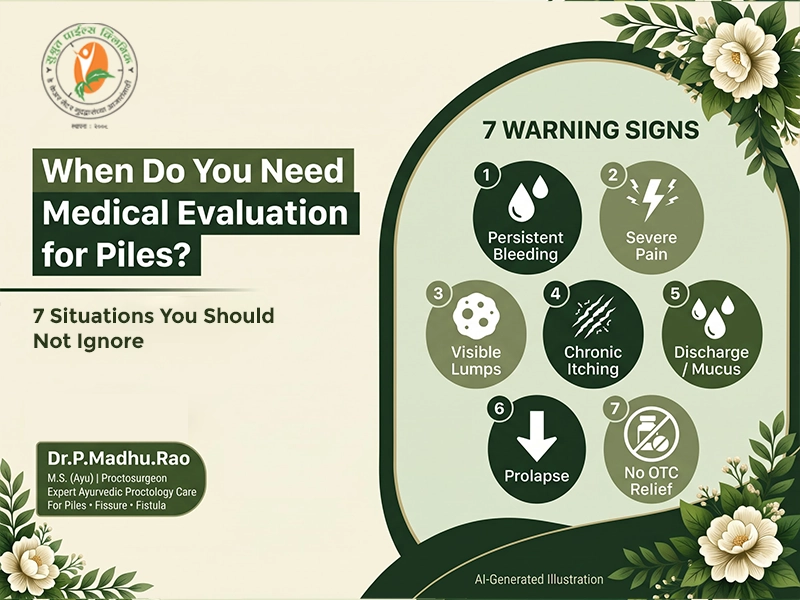
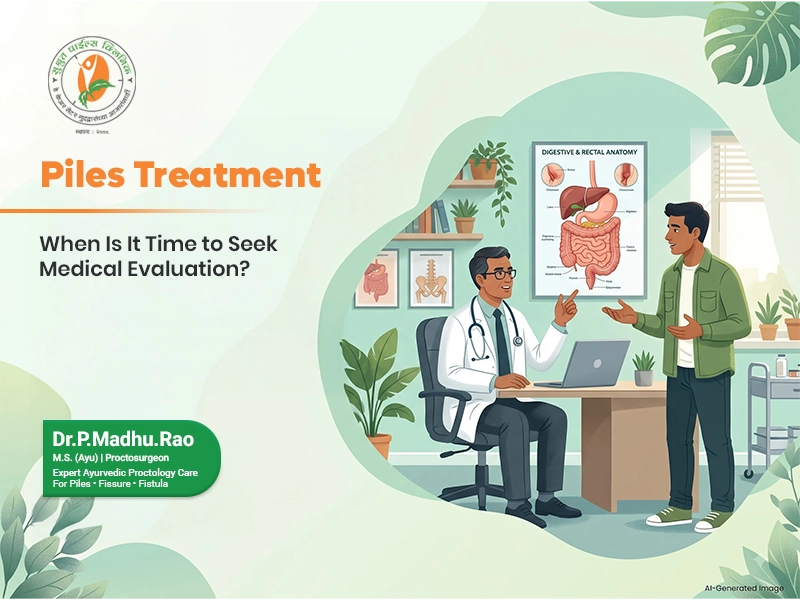
Consider seeking medical attention if you experience:
Heavy rectal bleeding, fainting, severe pain, or fever accompanied by increasing anal swelling requires urgent medical attention.
Rectal bleeding should never automatically be assumed to be caused by piles.
Before publication, the following points should be reviewed:
Laser technology may be used in selected procedures for different anorectal conditions. However, the techniques and clinical indications differ. Suitability depends on the specific diagnosis and medical assessment.
Yes. Many patients can manage hemorrhoids through dietary changes, improved bowel habits, medication, or office-based procedures. Surgery may be considered in selected cases.
No. Recovery varies according to the procedure, condition being treated, and individual health factors. A minimally invasive approach does not guarantee a particular recovery time or absence of complications.
Not necessarily. Chronic fissures may require additional treatment if conservative management is unsuccessful, but laser treatment is not automatically indicated. The appropriate approach depends on the clinical findings and available treatment options.
This article is intended for general educational purposes only and does not constitute medical advice, diagnosis, or treatment recommendations. Laser-based procedures, conventional surgery, and other treatment approaches have potential benefits, risks, and limitations. Individual suitability and outcomes vary. Consult a qualified healthcare professional for an appropriate assessment and personalised medical guidance. Seek urgent medical attention for heavy bleeding, fainting, severe anal pain, or fever accompanied by increasing swelling.
Considering laser proctology in Old Sangavi? Before choosing a procedure, get your condition properly evaluated and discuss the treatment options that may be appropriate for you.
Get the right diagnosis first. Then choose the treatment that fits your condition.
📍 Sushrut Piles Clinic
M.K.Chowk, above HDFC Bank, Kawade Nagar, Trimurti Colony, Pimple Gurav, Pimpri-Chinchwad, Pune, Maharashtra 411027
Ganpati chowk,Shitole Nagar, Old Sangavi,Pune - 411027.
Shop No. 19-20, Silver Central Mall, Jadhav Wadi, Moshi, Pune-412105
Eleifend senectus ornare hendrerit dis lacinia habitant mattis