

Qualification :- B.A.M.S
MMC No. – I-64912-A

Piles, medically known as hemorrhoids, are a common condition that can cause rectal bleeding, itching, swelling, discomfort, and pain during bowel movements. When these symptoms persist or interfere with everyday activities, medical evaluation may be necessary.
Finding an appropriate doctor is an important part of understanding the condition and exploring suitable treatment options. Patients may have questions about the doctor’s qualifications, diagnostic approach, available treatments, and follow-up care.
If you are looking for a piles doctor in Moshi, understanding what to check before choosing a healthcare professional can help you make a more informed decision.
Not every symptom around the anus is caused by piles. Anal fissures, fistulas, infections, and other gastrointestinal conditions can produce similar symptoms.
For example, hemorrhoids may cause bleeding or tissue protrusion, while anal fissures commonly cause sharp pain during or after bowel movements. An anal fistula may cause recurring discharge or swelling.
A proper medical assessment helps identify the underlying condition before treatment is considered.
The purpose of a consultation should be to understand the diagnosis, discuss suitable management options, and explain the potential benefits and limitations of treatment.
Check whether the doctor has appropriate medical qualifications, professional registration, and relevant experience in managing anorectal conditions.
Depending on the condition, patients may require assessment by a general surgeon, colorectal surgeon, or another appropriately qualified specialist.
It is reasonable to ask about the doctor’s experience in evaluating hemorrhoids, anal fissures, fistulas, and related conditions.
A consultation should begin with understanding your symptoms rather than immediately recommending a procedure.
Your doctor may ask:
Depending on the symptoms, a physical examination or additional investigation may be recommended.
This assessment helps distinguish between conditions that may otherwise appear similar.
Patients should understand what condition they have and why a particular treatment is being considered.
Depending on the diagnosis and severity, management may include:
Not every patient with piles requires surgery or a minimally invasive procedure.
Ask the doctor to explain the diagnosis, available alternatives, expected benefits, potential complications, and consequences of delaying treatment where relevant.
Different patients may require different treatment approaches.
For example, mild hemorrhoidal symptoms may improve with conservative management, while persistent or advanced hemorrhoids may require further intervention.
If laser treatment is suggested, ask why it is appropriate for your particular condition and whether other options are available.
A treatment recommendation should consider the severity of the condition, medical history, previous treatment, and individual clinical findings.
No procedure should be considered necessary simply because a particular technology is available.
Treatment does not always end with the initial consultation or procedure.
Depending on the condition, patients may require follow-up examinations, medication adjustments, recovery guidance, or further assessment.
Before proceeding with treatment, understand:
Follow-up arrangements are an important consideration when evaluating healthcare options.
If a procedure is recommended, ask about the expected recovery process before making a decision.
Important questions include:
Recovery varies according to the procedure, severity of the condition, and individual health factors.
A healthcare professional should explain realistic expectations rather than promise a particular result.
No two patients necessarily have the same symptoms or treatment requirements.
One person may have mild hemorrhoids associated with constipation, while another may have recurring bleeding or significant prolapse. Similarly, anal pain may be related to a fissure rather than piles.
A useful consultation should consider medical history, current symptoms, lifestyle, previous treatments, and individual preferences.
The treatment approach should be based on clinical findings rather than a one-size-fits-all recommendation.
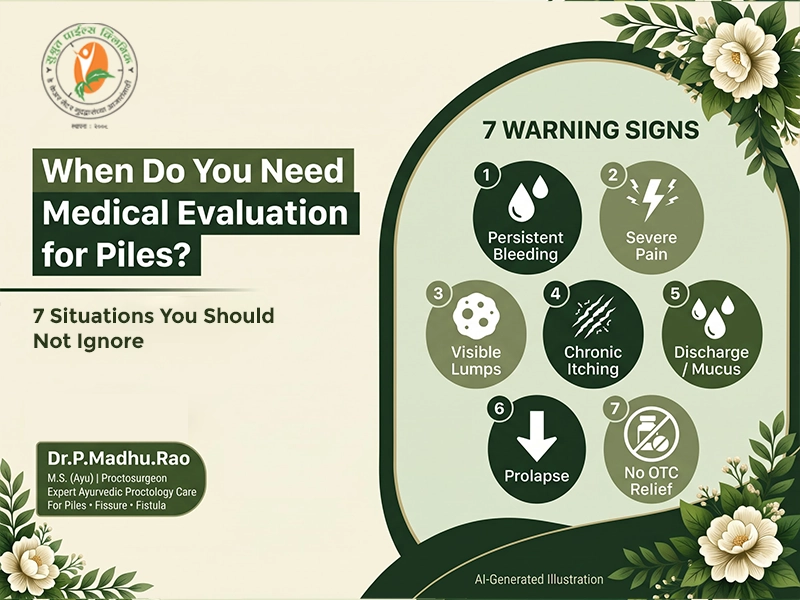
Medical evaluation is advisable when symptoms persist, recur, or interfere with daily activities.
Look out for:
Rectal bleeding should not automatically be attributed to piles. A healthcare professional can assess whether further examination or investigation is necessary.
Heavy bleeding, fainting, severe anal pain, or fever with increasing swelling requires urgent medical attention.
Preparing some basic information can make a medical consultation more useful.
Consider noting:
You can also prepare questions about diagnosis, treatment alternatives, recovery, potential complications, and follow-up.
Treatment depends on the type and severity of hemorrhoids.
Conservative management: Increasing dietary fibre, maintaining adequate hydration, avoiding straining, and improving bowel habits may help manage mild symptoms.
Medication: Certain medicines may help relieve itching, discomfort, or constipation. Their suitability depends on individual symptoms and medical history.
Office-based procedures: Rubber band ligation and sclerotherapy may be considered for selected internal hemorrhoids.
Minimally invasive procedures: Certain techniques, including laser-based procedures, may be considered in selected patients.
Surgery: Hemorrhoidectomy and other surgical approaches may be appropriate for certain advanced, persistent, or complicated cases.
Each option has different indications, benefits, limitations, and risks. The appropriate approach should be determined through medical assessment.
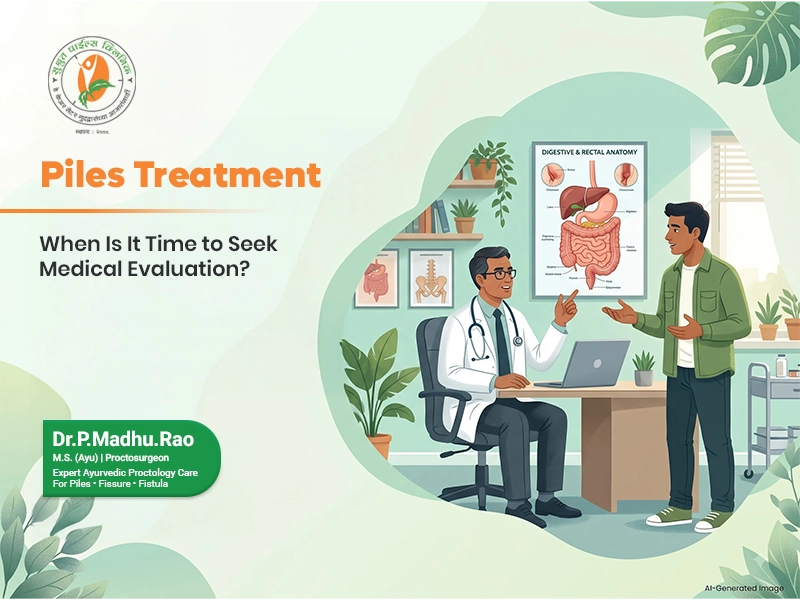

A qualified general surgeon, colorectal surgeon, or appropriately trained specialist who evaluates anorectal conditions can assess piles and discuss suitable treatment options.
No. Many patients can manage mild hemorrhoidal symptoms through dietary changes, improved bowel habits, and appropriate medical treatment. Procedures or surgery may be considered when clinically indicated.
No. Laser treatment is one possible option for selected patients. Its suitability depends on the type and severity of hemorrhoids and the clinical assessment.
Yes. Repeated or unexplained rectal bleeding should be medically evaluated because it can have causes other than hemorrhoids.
This article is intended for general educational purposes only and does not constitute medical advice, diagnosis, or treatment recommendations. Treatment suitability depends on individual clinical assessment. Consult a qualified healthcare professional for personalised medical guidance. Do not delay medical evaluation for persistent or unexplained rectal bleeding, severe pain, or other concerning symptoms.
Book a consultation at Sushrut Piles Clinic, Moshi to discuss your symptoms and understand the appropriate treatment options.
📍 Sushrut Piles Clinic, Moshi
M.K.Chowk, above HDFC Bank, Kawade Nagar, Trimurti Colony, Pimple Gurav, Pimpri-Chinchwad, Pune, Maharashtra 411027
Ganpati chowk,Shitole Nagar, Old Sangavi,Pune - 411027.
Shop No. 19-20, Silver Central Mall, Jadhav Wadi, Moshi, Pune-412105
Eleifend senectus ornare hendrerit dis lacinia habitant mattis