

Qualification :- B.A.M.S
MMC No. – I-64912-A

Pus discharge near the anus is a symptom that may indicate an infection or an underlying anorectal condition. When discharge repeatedly occurs from the same area, it is important to understand the possible causes and seek appropriate medical evaluation.
One possible cause is an anal abscess, which involves a collection of pus in the tissues surrounding the anus or rectum. Another possibility is an anal fistula, an abnormal tunnel that connects the anal canal or rectum to the skin near the anus.
Some individuals may experience recurring swelling, discomfort, a small opening near the anus or intermittent discharge. These symptoms can occur with different conditions, so a clinical examination is necessary to establish the cause.
This article explains the possible causes of pus discharge, common symptoms of an anal fistula, diagnostic methods and available treatment approaches.
Pus near the anus may develop when infection or inflammation affects the surrounding tissues. One possible cause is an anal abscess, which occurs when infected tissue forms a collection of pus.
An anal abscess may cause:
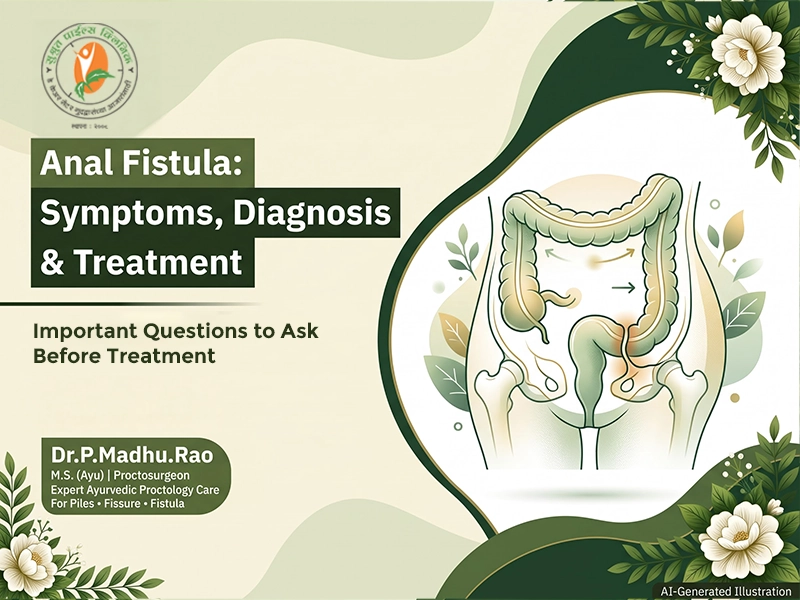
Another possible cause is an anal fistula. It is an abnormal passage connecting the inside of the anal canal or rectum to the surrounding skin. An external opening may release pus, fluid or occasionally blood.
Not every episode of anal discharge indicates a fistula. Other skin infections and anorectal conditions may produce similar symptoms.
Pus discharge can be associated with an anal fistula, particularly when fluid repeatedly comes from the same small opening near the anus.
Some individuals experience a recurring pattern in which swelling or discomfort develops, followed by pus drainage and temporary relief. This may happen because drainage reduces pressure, while an underlying fistula tract remains present.
However, an active abscess or another infection can also cause discharge. Symptoms alone cannot confirm the diagnosis. Medical assessment is necessary to identify the underlying condition.
Symptoms vary depending on the location and complexity of the fistula. Common signs may include:
Fever, increasing pain and significant swelling may indicate an associated abscess or active infection. These symptoms require prompt medical attention.
An anal fistula involves an abnormal tract between the anal canal or rectum and the surrounding skin. When fluid drains through the external opening, pressure may decrease and symptoms may temporarily improve.
However, if the underlying tract remains, discharge may occur again. In some cases, the opening becomes temporarily blocked, allowing fluid or infection to accumulate and produce renewed swelling and discomfort.
Repeatedly squeezing the affected area or applying home remedies may not resolve the underlying problem. Recurrent discharge should therefore be evaluated to determine its cause.
An anal abscess and an anal fistula are related but different conditions.
An abscess is a collection of pus caused by infection, whereas a fistula is an abnormal tunnel connecting the anal canal or rectum to the skin.
Some anal fistulas develop following an abscess. However, not every patient with an anal abscess develops a fistula.
Persistent drainage, recurring swelling or a wound that does not heal after an abscess has drained may require further assessment. Identifying whether a fistula is present is important when planning treatment.
Diagnosis generally begins with a discussion of symptoms and medical history. A healthcare professional may ask about previous abscesses, the duration of discharge, episodes of swelling, pain, bleeding and associated symptoms.
A physical examination may help identify an external opening, tenderness, swelling or signs of infection.
Depending on the suspected location and complexity of the fistula, additional investigations may be recommended. These can include:
Not every patient requires all these investigations. The choice depends on clinical findings and individual circumstances.
Treatment depends on the fistula’s location, complexity, associated infection and the patient’s overall health.
If an anal abscess is present, appropriate drainage is generally required to address the collection of pus. Antibiotics may be indicated in selected circumstances, such as spreading infection or specific medical risk factors, but they do not replace drainage when an abscess requires it.
Different approaches may be considered for fistula management, including:
Ksharsutra is another treatment approach used in some settings. Its suitability, evidence, potential risks and expected outcomes should be discussed with a qualified healthcare professional.
No single technique is appropriate for every fistula. Preserving normal bowel control is an important consideration when selecting treatment.
Medical evaluation is advisable if you experience repeated pus discharge, a persistent opening near the anus, recurrent swelling, pain or discharge following a previous abscess.
Prompt medical attention is particularly important if symptoms include fever, chills, rapidly increasing swelling, severe pain or general weakness, as these may indicate an active infection.
Avoid squeezing, puncturing or attempting to drain the affected area yourself. Keeping the surrounding skin clean and following appropriate medical advice can help reduce irritation while awaiting assessment.



No. Pus may occur due to an anal abscess, skin infection or other conditions. Repeated discharge from the same opening may raise suspicion of a fistula, but examination is necessary for diagnosis.
Some symptoms may temporarily improve when discharge occurs, but an established fistula may persist. Appropriate evaluation helps determine whether intervention is required.
No. An abscess is a collection of pus caused by infection, while a fistula is an abnormal tunnel connecting the anal canal or rectum to the skin. An abscess may sometimes lead to fistula formation.
Yes. Recurrence is possible and depends on factors such as fistula complexity, anatomy, associated infection and the treatment performed. Follow-up assessment is important.
This article is intended solely for general health education and public awareness. It does not constitute medical advice, diagnosis or treatment recommendations. Symptoms and treatment requirements vary between individuals. Consult a qualified healthcare professional for appropriate examination and personalised medical guidance. Seek urgent medical attention for fever, severe pain, rapidly increasing swelling or other signs of significant infection.
Experiencing pus discharge near the anus, recurrent anal discharge, or possible fistula symptoms in Moshi?
Don’t ignore repeated swelling or discharge.
📍 Visit Sushrut Piles Clinic in Moshi
M.K.Chowk, above HDFC Bank, Kawade Nagar, Trimurti Colony, Pimple Gurav, Pimpri-Chinchwad, Pune, Maharashtra 411027
Ganpati chowk,Shitole Nagar, Old Sangavi,Pune - 411027.
Shop No. 19-20, Silver Central Mall, Jadhav Wadi, Moshi, Pune-412105
Eleifend senectus ornare hendrerit dis lacinia habitant mattis