

Qualification :- B.A.M.S
MMC No. – I-64912-A

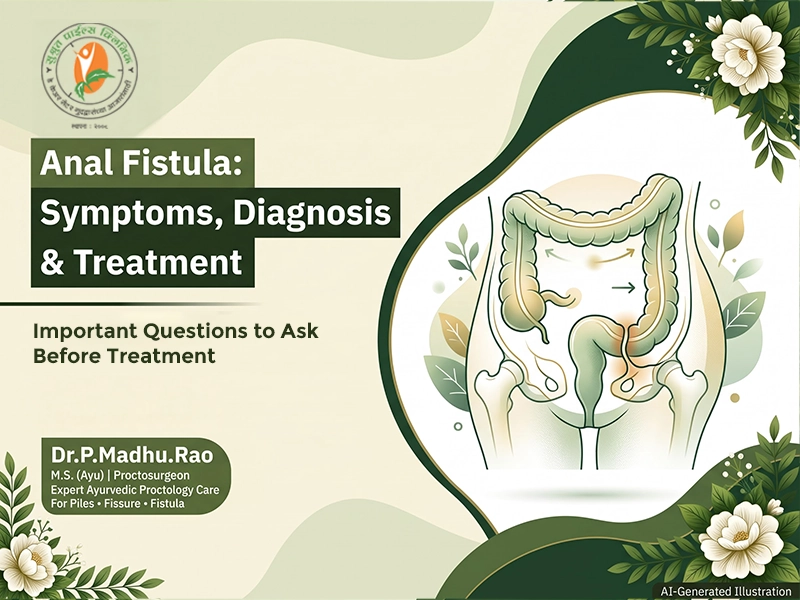
An anal fistula is an abnormal tunnel that develops between the inside of the anus or rectum and the surrounding skin. It commonly develops following an infection in an anal gland that leads to an abscess. Symptoms may include recurring pain, swelling, pus discharge, skin irritation or a small opening near the anus.
An anal fistula generally requires medical evaluation because the tract may persist and cause repeated infections. Treatment depends on its location, complexity and involvement of the anal sphincter muscles. Understanding the available options, including laser treatment and conventional surgery, can help individuals make informed decisions about their healthcare.
An anal fistula is an abnormal passage connecting the anal canal or rectum with the skin around the anus. It commonly develops when an anal gland becomes infected and forms an abscess.
After an abscess drains naturally or through a medical procedure, an abnormal tract may remain between the infected gland and the skin. This tract can continue to produce discharge and may cause repeated episodes of infection.
Other conditions, including Crohn’s disease, certain infections and previous anorectal procedures, may also contribute to fistula formation.
Common symptoms include:
The severity of symptoms varies. Some individuals experience intermittent discharge with limited pain, while others develop repeated swelling and significant discomfort.
Anal fistulas are classified according to their relationship with the anal sphincter muscles, which help control bowel movements.
Common types include:
Understanding the fistula’s anatomy is important because treatment must address the abnormal passage while considering the function of the surrounding muscles.
Treatment selection depends on the fistula’s location, depth, complexity, presence of infection and previous treatment history.
The available procedures may include the following approaches.
Fistulotomy is a commonly used surgical procedure for selected simple anal fistulas.
During the procedure, the fistula tract is opened along its length to allow the affected area to heal gradually. It is generally considered when the tract involves a limited amount of sphincter muscle.
For fistulas involving more sphincter tissue, another approach may be considered because dividing these muscles can affect bowel control.
Laser treatment, sometimes called FiLaC (Fistula-tract Laser Closure), is a minimally invasive technique used for selected anal fistulas.
A specialised laser fibre is introduced into the fistula tract. Controlled laser energy is applied along the tract to promote tissue contraction and closure.
The procedure aims to treat the abnormal passage while limiting damage to the surrounding sphincter muscles.
However, laser treatment is not suitable for every fistula. Its outcomes depend on the tract’s anatomy, complexity and clinical characteristics. Recurrence or incomplete closure may occur, and further treatment may sometimes be required.
A seton is a surgical thread or similar material placed through the fistula tract.
It may be used to maintain drainage and control infection, particularly in complex fistulas. In certain cases, a seton is used as part of a staged treatment plan.
The type of seton and duration of placement depend on the clinical findings and treatment objectives.
LIFT stands for Ligation of the Intersphincteric Fistula Tract.
This procedure involves identifying and closing the fistula tract within the space between the internal and external sphincter muscles.
It is one of the sphincter-preserving approaches that may be considered for selected transsphincteric fistulas.
An advancement flap procedure may be considered for certain complex fistulas.
The internal opening of the fistula is closed using a flap of healthy tissue taken from the rectal or anal lining. This approach aims to address the internal opening while reducing the need to divide sphincter muscle.
The suitability of this procedure depends on the fistula’s characteristics and the patient’s overall health.
Medicines may help manage associated infection, inflammation or discomfort, depending on the underlying condition. However, an established anal fistula generally does not close through medication alone.
Antibiotics may be prescribed in selected situations, particularly when there is an associated infection. They do not usually eliminate the abnormal fistula tract.
Home remedies and dietary changes may support bowel health and reduce discomfort, but they cannot reliably remove an established fistula.
Persistent discharge, swelling or recurring abscesses require clinical evaluation to determine whether a procedure is necessary.
Diagnosis generally begins with a review of symptoms and medical history, followed by an examination of the anal region.
Depending on the findings, additional investigations may include:
These investigations help determine the fistula’s complexity and guide treatment planning.
Persistent discharge, recurring swelling, pain or an opening near the anus should be medically evaluated.
Prompt attention is particularly important if symptoms include fever, increasing pain, redness, swelling or pus formation, as these may indicate an active abscess or infection.
Severe pain, rapidly increasing swelling, fever or feeling generally unwell warrants urgent medical assessment.
Early diagnosis can help identify the fistula’s anatomy and determine an appropriate management approach.
An anal fistula is an abnormal passage that may develop following an infection or abscess near the anus. Treatment options include fistulotomy, laser treatment, seton placement, LIFT and advancement flap procedures.
The appropriate approach depends on the fistula’s location, complexity and involvement of the anal sphincter muscles. Proper diagnosis, individualised treatment planning and follow-up care are important aspects of managing this condition.



An established anal fistula generally does not close on its own. Medicines may help manage associated infection, but procedural or surgical treatment is commonly required to address the tract.
No. Laser treatment may be considered for selected patients, depending on the fistula’s location, complexity and relationship with the sphincter muscles. Clinical assessment is necessary before selecting this approach.
Yes. Recurrence can occur after different fistula procedures. The possibility depends on factors such as fistula complexity, associated infection, healing and the treatment performed. Follow-up assessment is important.
Complex fistulas may require sphincter-preserving procedures such as seton placement, LIFT or an advancement flap. The choice depends on the fistula’s anatomy, previous treatment and individual clinical findings.
This article is intended for general educational purposes only and should not replace professional medical advice, diagnosis or treatment. The information provided does not establish the presence of an anal fistula or determine which procedure is appropriate for an individual. Treatment decisions should be based on clinical examination, relevant investigations and assessment by a qualified healthcare professional. Individuals experiencing persistent discharge, pain, swelling or fever should seek medical evaluation.
Sushrut Surgical Hospital provides consultation and treatment guidance for fistula and other anorectal conditions in Pimple Gurav.
📍 Location: Pimple Gurav, Pune
Contact Sushrut Surgical Hospital for consultation and personalized guidance for fistula treatment in Pimple Gurav.
M.K.Chowk, above HDFC Bank, Kawade Nagar, Trimurti Colony, Pimple Gurav, Pimpri-Chinchwad, Pune, Maharashtra 411027
Ganpati chowk,Shitole Nagar, Old Sangavi,Pune - 411027.
Shop No. 19-20, Silver Central Mall, Jadhav Wadi, Moshi, Pune-412105
Eleifend senectus ornare hendrerit dis lacinia habitant mattis