


Qualification :- B.A.M.S
MMC No. – I-64912-A

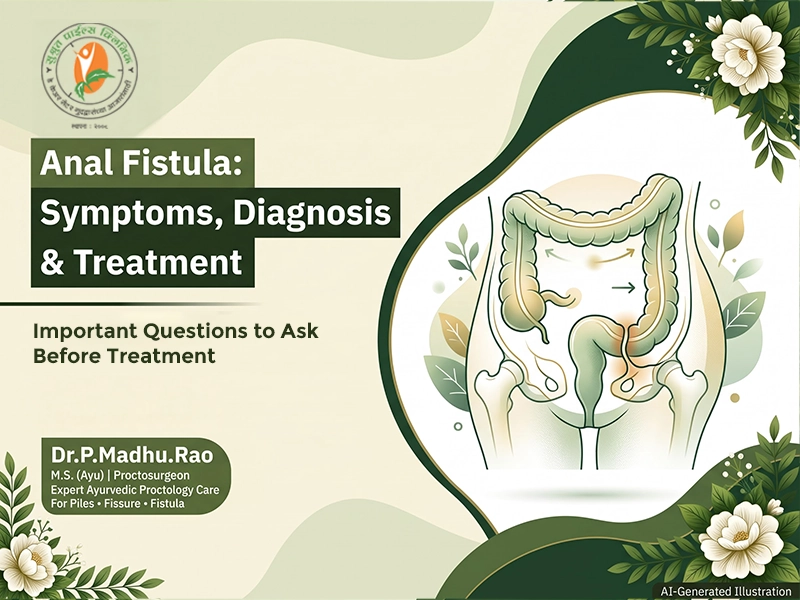
An anal fistula is an abnormal passage that develops between the anal canal or rectum and the skin surrounding the anus. It may cause repeated pus discharge, swelling, discomfort, irritation and recurrent infection. The condition can affect daily activities and may require medical or surgical intervention.
Ksharasutra is an Ayurvedic parasurgical technique used in the management of selected cases of anal fistula. It involves the placement of a specially prepared medicated thread through the fistulous tract. The thread is changed periodically under clinical supervision as part of the treatment process.
However, Ksharasutra is not suitable for every fistula. Understanding the condition, treatment technique, potential limitations and alternative approaches is important before making a healthcare decision.
An anal fistula, medically known as fistula-in-ano, is an abnormal tunnel connecting the anal canal or rectum with the skin near the anus.
It commonly develops following an anal abscess, which is a collection of pus caused by infection in the surrounding tissues. In some cases, an abnormal tract remains after the abscess drains.
Common symptoms include:
The symptoms and complexity of an anal fistula vary between individuals. Proper examination is necessary to establish the diagnosis and determine the appropriate management.
Ksharasutra is a traditional Ayurvedic parasurgical technique used for selected cases of fistula-in-ano.
The procedure involves placing a specially prepared thread, coated with Ayurvedic medicinal substances, through the fistulous tract. The thread is periodically replaced according to the treatment protocol.
The technique is intended to gradually manage the fistulous tract while healing occurs. Its application, treatment duration and results may vary depending on the anatomy of the fistula and individual clinical circumstances.
Ksharasutra should not be considered a universal treatment for all types of anal fistulas. Patients should understand its potential benefits, limitations, risks and available alternatives before considering the procedure.
The technique involves passing the prepared medicated thread through the fistulous tract, connecting its internal and external openings where anatomically appropriate.
The thread is subsequently changed at scheduled intervals under professional supervision.
Treatment planning may depend on:
The treatment process requires regular monitoring. The exact technique and schedule should be determined by the treating practitioner.
The general treatment process may involve several stages.
The exact procedure may differ depending on the patient’s condition and the practitioner’s treatment protocol.
No. Anal fistulas can be classified as simple or complex according to their anatomy and relationship with the anal sphincter muscles.
A treatment approach that may be considered for one type of fistula may not be appropriate for another.
Before considering Ksharasutra, the assessment should include the fistula’s location, tract anatomy, sphincter involvement, associated infection and overall patient health.
Some patients may require conventional surgical procedures or other sphincter-preserving techniques. Treatment selection should be based on clinical findings rather than preference for a particular method.
Several approaches are used in the management of anal fistulas. These include:
Each approach has different indications, limitations and potential complications. Evidence supporting different treatments also varies.
There is no single treatment suitable for every patient. The relationship between the fistula tract and anal sphincter is particularly important because preserving normal bowel control is a major treatment consideration.
Treatment duration varies according to the length and complexity of the fistula, healing response, associated infection and previous procedures.
Because the thread is periodically changed, treatment may involve multiple follow-up visits over an extended period.
Patients should avoid relying on fixed treatment-duration promises. The expected treatment course should be discussed after proper examination.
Some patients may experience discomfort, irritation, burning or tenderness during treatment and thread changes.
The experience varies depending on the fistula anatomy, treatment technique and individual sensitivity.
Severe or increasing pain, fever, rapidly increasing swelling or significant bleeding requires prompt medical evaluation.
Follow-up and appropriate local care are important during treatment.
General care recommendations may include:
Individual instructions should be provided by the treating healthcare professional.
Yes. Recurrence is possible after different fistula treatment approaches.
The likelihood may depend on fistula complexity, tract anatomy, associated infection, underlying medical conditions and the treatment performed.
Even when discharge and discomfort improve, follow-up assessment is important to evaluate healing and identify possible recurrence.



Suitability depends on the fistula’s anatomy, sphincter involvement, associated infection and individual health. Complex fistulas require careful assessment, and alternative procedures may be more appropriate in some cases.
The technique generally involves periodic thread changes and follow-up examinations. The number and frequency of visits depend on the treatment protocol and individual healing response.
An established fistula may persist even when discharge temporarily decreases. Medical evaluation is important to determine whether treatment is necessary.
Yes. Recurrence is possible. Follow-up is necessary to assess healing and identify persistent or recurring disease.
This article is intended solely for general health education and public awareness. It does not constitute medical advice, diagnosis or treatment recommendations. Ksharasutra and other fistula treatments have different indications, limitations and potential risks. Individual suitability and outcomes vary. Consult an appropriately qualified healthcare professional for clinical assessment and personalised guidance. Seek prompt medical attention for fever, severe pain, rapidly increasing swelling or other signs of significant infection.
Our philosophy:
Understand the condition. Choose the appropriate treatment. Follow the healing journey.
M.K.Chowk, above HDFC Bank, Kawade Nagar, Trimurti Colony, Pimple Gurav, Pimpri-Chinchwad, Pune, Maharashtra 411027
Ganpati chowk,Shitole Nagar, Old Sangavi,Pune - 411027.
Shop No. 19-20, Silver Central Mall, Jadhav Wadi, Moshi, Pune-412105
Eleifend senectus ornare hendrerit dis lacinia habitant mattis