
Qualification :- B.A.M.S
MMC No. – I-64912-A

Kshar Sutra is a traditional Ayurvedic para-surgical procedure that uses a specially prepared medicated thread to manage certain anorectal conditions, particularly anal fistula.
Although it is sometimes discussed alongside piles (haemorrhoids), these are two different conditions requiring different treatment approaches. An anal fistula is an abnormal passage between the anal canal and surrounding skin, whereas piles involve enlarged vascular cushions in the anal canal or around the anus.
Understanding the purpose, procedure, limitations and available alternatives can help patients make informed healthcare decisions.
Kshar Sutra is a traditional Ayurvedic technique involving a specially prepared thread coated with medicinal and alkaline substances according to Ayurvedic methods.
The thread is passed through an identified fistula tract under clinical supervision and replaced at planned intervals. The traditional purpose is to gradually manage the affected tract while allowing tissue healing to occur.
Kshar Sutra is sometimes compared with a medicated seton technique. However, their materials, preparation and treatment protocols are not necessarily the same.
It is important to understand that Kshar Sutra is primarily associated with fistula management and is not a routine treatment for haemorrhoids.
During the procedure, the prepared thread is placed through the fistula tract and periodically replaced under clinical supervision.
The treatment generally involves multiple follow-up visits to assess the tract, discharge, discomfort and healing progress.
Treatment duration varies according to the length and complexity of the fistula, previous procedures and individual healing response.
Possible concerns include local discomfort, irritation, bleeding, infection, delayed healing and recurrence. Its suitability depends on the fistula’s anatomy and relationship with the anal sphincter muscles, which help control bowel movements.
Clinical evidence does not establish that Kshar Sutra is superior to all conventional surgical procedures or suitable for every patient.
Kshar Sutra may be considered in selected cases following an appropriate clinical assessment.
Factors that influence treatment decisions include:
Patients with an active abscess may require prompt medical assessment and drainage before definitive treatment.
Complex or recurrent fistulas require careful evaluation. Conditions such as Crohn’s disease may also influence treatment planning.
Kshar Sutra is not a routine treatment for piles.
Haemorrhoids develop when vascular cushions in the anal canal become enlarged or symptomatic.
Common symptoms include:
Piles and fistulas have different causes and require different treatment approaches. Rectal bleeding or an anal lump should not automatically be attributed to piles, as fissures, infections and other bowel conditions can cause similar symptoms.
Treatment depends on the type, severity and symptoms of haemorrhoids.
No single treatment is suitable for everyone. The appropriate option should be determined after examination.
Many people with mild or moderate haemorrhoids can initially be managed without an operation.
Dietary fibre, adequate hydration, improved bowel habits and appropriate medical treatment may help control symptoms.
Avoiding prolonged toilet sitting and excessive straining can also support bowel health.
However, persistent bleeding, significant prolapse or advanced haemorrhoids may require office-based procedures or surgery.
Kshar Sutra should not be presented as a guaranteed non-surgical solution for piles because its traditional role is primarily associated with fistula management.
Diagnosis generally begins with a review of symptoms, medical history and physical examination.
Depending on the suspected condition, assessment may include:
Additional investigations may be necessary when rectal bleeding has no clear explanation or other bowel conditions are suspected.
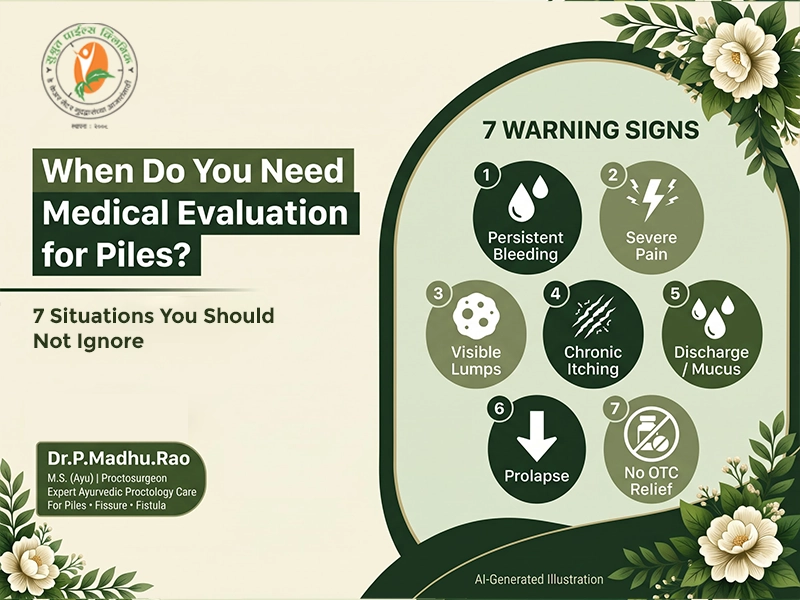
Medical assessment is important if you experience repeated rectal bleeding, persistent anal pain, swelling, discharge, a recurring lump or tissue protruding from the anus.
Seek urgent medical attention if you develop:
These symptoms may indicate an infection or abscess requiring prompt assessment.
Kshar Sutra is a traditional Ayurvedic para-surgical procedure primarily associated with selected cases of anal fistula. Although it is sometimes discussed alongside piles treatment, these conditions are different and should not be treated interchangeably.
Patients considering Kshar Sutra should understand its traditional approach, possible risks, limitations and available alternatives. Proper diagnosis and assessment of fistula anatomy and anal sphincter involvement are important before selecting treatment.
An appropriately qualified healthcare professional can help assess the condition and discuss suitable treatment options.

Kshar Sutra is a traditional Ayurvedic treatment technique that uses a specially prepared medicated thread. It is particularly associated with the treatment of certain anal fistulas and requires appropriate medical evaluation and follow-up.
Kshar Sutra is more traditionally associated with fistula treatment than routine treatment of hemorrhoids. Patients with piles should first have their condition properly diagnosed to determine the most appropriate treatment.
Kshar Sutra treatment may be available in Pimple Gurav depending on the clinic and the patient’s diagnosis. A qualified doctor should evaluate the condition before recommending this therapy.
Kshar Sutra is a thread-based Ayurvedic procedure and should not automatically be considered a non-surgical treatment for piles. Some piles can be managed without surgery, while advanced cases may require a procedure or surgery depending on their severity.
The best treatment depends on the type and grade of piles, symptoms, and individual health. Treatment may range from dietary and lifestyle changes to medicines, minimally invasive procedures, or surgery. A specialist can recommend the most appropriate option after evaluation.
This article is intended for general educational purposes only. It does not replace professional medical advice, diagnosis or treatment. Kshar Sutra is described as a traditional Ayurvedic approach, and its suitability and possible risks vary between individuals. Consult an appropriately qualified healthcare professional for examination and treatment guidance. Do not delay medical attention for persistent pain, fever, swelling or significant bleeding.
Contact Sushrut Surgical Hospital for consultation and personalized guidance regarding Kshar Sutra treatment and piles treatment in Pimple Gurav.
📍 Location: Pimple Gurav, Pune
M.K.Chowk, above HDFC Bank, Kawade Nagar, Trimurti Colony, Pimple Gurav, Pimpri-Chinchwad, Pune, Maharashtra 411027
Ganpati chowk,Shitole Nagar, Old Sangavi,Pune - 411027.
Shop No. 19-20, Silver Central Mall, Jadhav Wadi, Moshi, Pune-412105
Eleifend senectus ornare hendrerit dis lacinia habitant mattis