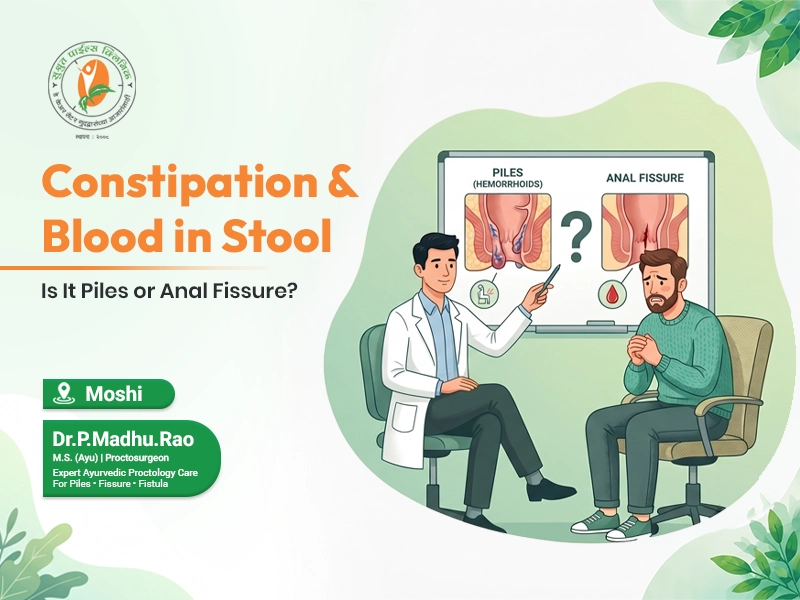


Constipation and blood in stool can be concerning, especially when bleeding appears after passing hard or dry stool. Constipation can cause excessive straining and may contribute to problems such as anal fissures or aggravate piles. A person may notice bright red blood on toilet paper, on the surface of the stool, or in the toilet after a bowel movement. While constipation bleeding, blood after constipation, and hard stool bleeding can occur with common anorectal conditions, rectal bleeding should not automatically be assumed to be piles or fissure. The location, amount, color of blood, associated pain, bowel habits, and duration of symptoms are important. If you experience blood while passing hard stool or repeated bleeding after bowel movement, getting evaluated by a qualified doctor can help identify the cause and determine whether treatment is needed.
Constipation commonly results in hard, dry stools that can be difficult to pass. When a person strains repeatedly or passes a large, hard stool, the delicate tissues around the anal canal may become irritated or injured. This can result in small amounts of bleeding, particularly during or immediately after bowel movements.
One of the common conditions associated with fissure due to constipation is an anal fissure. A fissure is a small tear in the lining of the anus and may cause sharp pain, burning, or discomfort while passing stool. Bright red blood may appear on the toilet paper or on the outside of the stool.
Constipation can also aggravate existing hemorrhoids. Increased pressure and straining during bowel movements may worsen swelling and irritation of the hemorrhoidal tissues. This is why piles and constipation frequently occur together. However, bleeding can have several possible causes, so persistent or unexplained bleeding should be medically evaluated.
Hard stool can stretch and irritate the anal canal as it passes through. If the stool is particularly dry or large, it may cause a small tear in the anal lining. This is one reason some people experience sudden pain and bleeding after passing a hard bowel movement.
Repeated constipation can create a cycle in which pain makes a person reluctant to pass stool. Delaying bowel movements can make stool harder, which may lead to more straining and further irritation. In the case of an anal fissure, this cycle can interfere with healing and contribute to recurring symptoms.
Hard stool can also increase pressure on hemorrhoidal tissues. People with existing piles may notice increased swelling, discomfort, itching, or bleeding when constipation becomes worse. Improving bowel consistency is therefore an important part of managing both constipation-related anorectal symptoms and preventing their recurrence.
Both piles and anal fissures can cause rectal bleeding, but the associated symptoms may differ. Piles commonly cause bright red bleeding during or after bowel movements and may also produce itching, swelling, discomfort, or a lump around the anus. Internal piles may bleed without causing significant pain.
An anal fissure is more commonly associated with sharp or burning pain during bowel movements, followed by discomfort that may continue afterward. A small amount of bright red blood may be noticed on toilet paper or the surface of the stool.
These patterns can provide clues but cannot confirm the diagnosis on their own. Other conditions can also cause rectal bleeding. If bleeding continues, becomes heavier, occurs without constipation, or is accompanied by other concerning symptoms, professional medical evaluation is important.
Bright red blood after constipation often indicates bleeding from the lower part of the digestive tract, particularly the anal or rectal region. Piles and anal fissures are common causes, especially when bleeding occurs after passing hard stool or straining. However, the color of blood alone cannot establish the cause.
If you notice repeated blood after constipation, pay attention to whether there is pain, itching, swelling, a lump, mucus, changes in bowel habits, or other symptoms. These details can help your doctor determine what evaluation may be appropriate.
Even when piles or fissure appear likely, recurrent bleeding should not simply be self-treated indefinitely. A doctor can examine the area and determine whether the bleeding is related to an anorectal condition or whether another cause needs to be investigated.
Straining increases pressure within the anal and rectal region. Repeated straining can aggravate swollen hemorrhoidal tissues and may increase discomfort or bleeding. It can also place additional stress on an anal fissure and interfere with healing.
Spending a long time on the toilet and repeatedly trying to pass hard stool can further contribute to irritation. Improving bowel habits is therefore an important part of managing constipation bleeding and reducing the risk of recurrent anorectal symptoms.
Avoiding excessive straining, responding to the urge to pass stool, maintaining adequate fluid intake, consuming appropriate dietary fiber, and staying physically active can support healthier bowel habits. If constipation continues despite these measures, medical advice can help identify contributing factors and appropriate treatment.
Preventing constipation can help reduce the risk of fissures and may reduce irritation associated with piles. Helpful habits can include consuming sufficient dietary fiber from suitable foods, drinking adequate fluids, staying physically active, and maintaining a regular bowel routine.
Avoid repeatedly delaying bowel movements and try not to spend excessive time sitting on the toilet. If you regularly experience hard stools, discuss the problem with a doctor rather than relying on repeated short-term remedies.
People who already have piles or an anal fissure may need additional measures depending on the severity of their condition. Appropriate treatment can help break the cycle of constipation, pain, straining, and recurrent bleeding.
Constipation accompanied by repeated bleeding should be evaluated, particularly when the bleeding persists, becomes more frequent, or occurs with significant pain, swelling, weight loss, changes in bowel habits, weakness, dizziness, black stools, or other unusual symptoms. Heavy bleeding or symptoms of significant blood loss require prompt medical attention.
Even a small amount of bright red blood should not automatically be assumed to be piles. A doctor can determine whether the symptoms are consistent with a fissure, hemorrhoids, or another condition and decide whether additional evaluation is necessary.
If you are experiencing bleeding after bowel movement repeatedly, especially without an obvious explanation, seeking professional advice is safer than continuing self-treatment.
Diagnosis usually begins with a discussion about your symptoms, bowel habits, constipation history, bleeding pattern, pain, previous anorectal problems, and treatment history. The doctor may then examine the area around the anus to look for a fissure, piles, swelling, skin changes, or other abnormalities.
Depending on the symptoms and examination findings, additional evaluation may sometimes be required. The purpose is to identify the actual cause of bleeding rather than assuming that every episode is caused by piles or constipation.
If you are experiencing blood while passing hard stool, sharing details such as when the bleeding occurs, its appearance, amount, and whether pain is present can help your doctor understand the problem more clearly.
Treatment depends on whether the bleeding is caused by constipation alone, piles, an anal fissure, or another condition. For constipation, treatment may include dietary and lifestyle changes, adequate hydration, improved bowel habits, and medicines when recommended by a doctor.
Mild piles may sometimes be managed with conservative measures, while persistent or advanced hemorrhoids may require medicines or a procedure depending on their severity. Anal fissures may improve with measures that soften stools and reduce strain, while chronic fissures may require additional medical or procedural treatment.
The most appropriate treatment should be selected after diagnosis rather than choosing a procedure based only on the presence of bleeding. If you are experiencing constipation and blood in stool, professional evaluation can help determine the cause and guide appropriate treatment.
There is no single treatment for every case. The correct approach depends on the cause of bleeding. If constipation is the main problem, improving stool consistency and bowel habits may help. If piles or an anal fissure are responsible, condition-specific treatment may be required. Persistent or unexplained bleeding should be evaluated by a doctor.
Seeing blood after passing hard stool can be alarming, but the cause can often be identified with appropriate medical evaluation. Constipation may contribute to anal fissures and can aggravate piles, but rectal bleeding should not automatically be attributed to either condition.
If you experience hard stool bleeding, repeated blood after bowel movements, anal pain, swelling, a lump, or persistent constipation, consider consulting a qualified specialist. Early evaluation can help identify the cause and prevent symptoms from continuing or becoming more troublesome.
Constipation and blood in stool can occur because hard stool and straining irritate the anal canal, contribute to fissures, or aggravate piles. While these are common causes, rectal bleeding should not always be assumed to be hemorrhoids.
If you repeatedly experience blood after constipation, pain while passing stool, piles symptoms, or bleeding after bowel movement, getting evaluated can help identify the underlying problem and guide appropriate treatment.
Sushrut Surgical Hospital, Moshi provides consultation and treatment guidance for piles, fissure, fistula, constipation-related anorectal symptoms, and other proctology conditions.

Yes. Passing hard stool and straining can irritate or tear the anal lining, causing bleeding. Constipation can contribute to anal fissures and may also aggravate piles. However, persistent rectal bleeding should be evaluated to identify the actual cause.
Bright red blood can occur with both piles and anal fissures. Fissures are often associated with sharp pain during or after bowel movements, while piles may cause painless bleeding, itching, swelling, or a lump. An examination may be needed to confirm the cause.
Hard or dry stool can stretch and irritate the anal canal as it passes. It may create a small tear known as an anal fissure or aggravate swollen hemorrhoidal tissue, resulting in bleeding.
Preventing constipation is important. Consume appropriate dietary fiber, drink adequate fluids, remain physically active, avoid excessive straining, and maintain healthy bowel habits. Persistent symptoms should be discussed with a doctor.
You should consider medical evaluation if bleeding is repeated, persistent, heavy, unexplained, or accompanied by significant pain, swelling, changes in bowel habits, weakness, dizziness, black stools, or other concerning symptoms.
Contact Sushrut Surgical Hospital for consultation and personalized guidance for constipation and blood in stool in Moshi.
📍 Location: Moshi, Pune
M.K.Chowk, above HDFC Bank, Kawade Nagar, Trimurti Colony, Pimple Gurav, Pimpri-Chinchwad, Pune, Maharashtra 411027
Ganpati chowk,Shitole Nagar, Old Sangavi,Pune - 411027.
Shop No. 19-20, Silver Central Mall, Jadhav Wadi, Moshi, Pune-412105
Eleifend senectus ornare hendrerit dis lacinia habitant mattis