


Qualification :- B.A.M.S
MMC No. – I-64912-A

An anal fistula is an abnormal passage between the anal canal and the surrounding skin. It commonly develops following an infection in an anal gland that causes an abscess. Even after the abscess drains, the tract may remain, resulting in recurring discharge, swelling, irritation and discomfort.
Ksharasutra is a traditional Ayurvedic para-surgical procedure used in selected cases of anal fistula. It involves placing a specially prepared medicated thread through the fistula tract and replacing it periodically under clinical supervision.
Understanding its procedure, benefits, risks and limitations is important before considering this treatment. Suitability depends on fistula complexity, sphincter involvement and individual health conditions.
Ksharasutra is a traditional Ayurvedic technique that uses a specially prepared medicated thread. The thread is passed through the identified fistula tract, connecting its internal and external openings.
It is replaced at planned intervals to gradually manage the tract while healing takes place. Although sometimes compared with a medicated seton, Ksharasutra differs in its preparation, materials and treatment approach.
It is not suitable for every anal fistula. Factors such as tract location, length, secondary branches, previous procedures and anal sphincter involvement must be assessed before treatment.
During Ksharasutra therapy, the prepared thread is placed through the fistula tract using an appropriate clinical technique. It is periodically replaced under professional supervision.
The traditional approach aims to gradually manage the tract through local tissue effects while healing occurs.
Regular follow-up is necessary to monitor discharge, discomfort and healing progress. Treatment duration varies according to fistula anatomy, complexity and individual healing response.
Although clinical studies have examined Ksharasutra, available evidence does not establish that it is universally superior to conventional fistula surgery.
Ksharasutra may be considered for selected patients after proper clinical assessment. Important factors include:
Fistula location and length.
Whether the fistula is simple or complex.
Involvement of anal sphincter muscles.
Presence of multiple branches or openings.
Previous fistula surgeries.
Associated infections and medical conditions.
Patients with an active abscess may require prompt assessment and drainage before definitive treatment. Consultation with an appropriately qualified healthcare professional, particularly a colorectal surgeon for complex or recurrent fistulas, helps determine suitable options.
Before treatment, the healthcare professional evaluates symptoms, medical history and examination findings. Additional investigations may be recommended to understand the fistula pathway.
If Ksharasutra is selected, the medicated thread is placed through the tract and replaced at scheduled intervals.
Treatment generally involves:
Periodic thread replacement.
Monitoring discharge and local tissue changes.
Assessing pain, irritation and healing.
Following hygiene and aftercare instructions.
Some patients may experience discomfort, irritation, minor bleeding or discharge. Increasing pain, fever, worsening swelling or significant bleeding requires medical attention.
Like other anal fistula treatments, Ksharasutra has potential risks and limitations, including:
Pain or discomfort.
Local irritation and minor bleeding.
Infection or inflammation.
Delayed healing.
Persistent or recurrent fistula.
Potential complications involving anal sphincter function.
Outcomes depend on fistula anatomy, practitioner experience, treatment technique and individual health.
Long-term evidence regarding healing, recurrence and complications remains limited compared with some established surgical approaches. Therefore, patients should understand that Ksharasutra does not guarantee permanent healing or freedom from complications.
Several conventional procedures are available for anal fistula treatment:
1. Fistulotomy: The fistula tract is opened to heal from the inside outward. It is generally considered for selected simple fistulas with limited sphincter involvement.
2. Surgical Seton: A thread or similar material is placed through the tract. A loose draining seton may help control infection and maintain drainage while further treatment is planned.
3. LIFT Procedure: Ligation of the intersphincteric fistula tract addresses the tract between the anal sphincter muscles, aiming to preserve sphincter function.
4. Advancement Flap: Healthy tissue is used to cover the internal fistula opening. It may be considered for selected complex fistulas.
The appropriate procedure depends on fistula complexity, sphincter involvement, recurrence risk and overall health. Preserving bowel control is an important consideration in treatment planning.
The visible external opening may not reveal the complete fistula pathway. Clinical examination helps assess the affected area and identify possible complications.
Depending on the findings, investigations may include:
Physical and digital rectal examination.
Pelvic MRI, particularly for complex or recurrent fistulas.
Endoanal ultrasound in selected cases.
Accurate diagnosis helps determine the fistula’s complexity and identify an appropriate treatment approach.
Persistent discharge, recurring swelling, pain or an opening near the anus should be medically assessed.
Seek urgent medical attention if you experience fever, chills, rapidly increasing pain, worsening swelling, significant bleeding or pus discharge accompanied by feeling unwell.
An untreated abscess can lead to worsening infection, making timely medical assessment important.
Ksharasutra is a traditional Ayurvedic treatment approach used in selected cases of anal fistula. Although it has been studied clinically, its benefits, limitations and long-term outcomes require careful consideration.
Proper diagnosis and assessment of fistula anatomy and sphincter involvement are essential before choosing treatment. Patients should discuss available options and possible complications with a qualified healthcare professional.
ASCRS Clinical Practice Guidelines (2022), NHS – Anal Fistula, Cleveland Clinic – Anal Fistula.

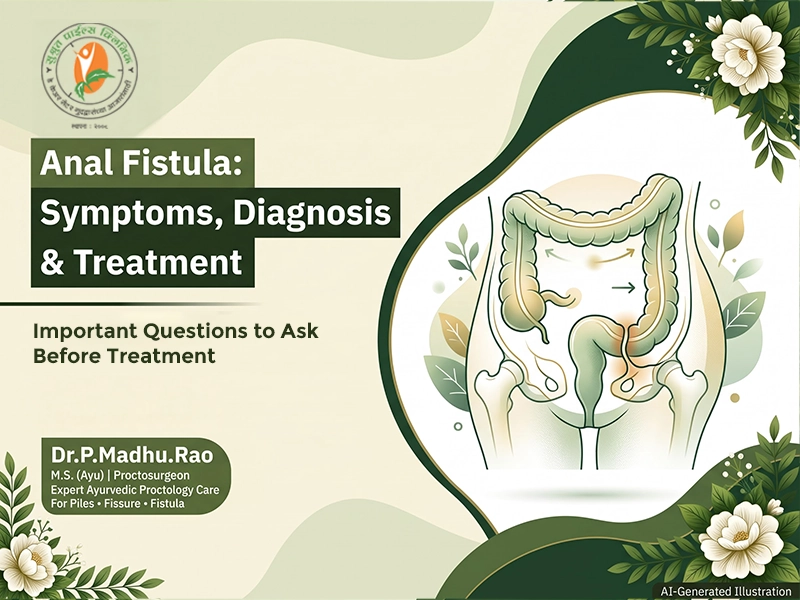



Ksharasutra is a traditional Ayurvedic procedure that uses a specially prepared medicated thread. It is particularly associated with the management of certain cases of fistula-in-ano and requires appropriate clinical assessment and regular follow-up.
In traditional practice, the medicated thread is placed through the fistula tract and periodically changed under medical supervision. The process is intended to gradually address the tract while allowing healing to occur.
Ksharasutra treatment may be available in Old Sangavi depending on the clinic and the patient’s diagnosis. A qualified practitioner should assess the fistula and determine whether this therapy is appropriate.
Ksharasutra is not automatically better than conventional surgery. The appropriate treatment depends on the fistula’s location, complexity, sphincter involvement, previous treatment, and individual health. A specialist can explain the options suitable for your condition.
The treatment duration varies depending on factors such as the length and complexity of the fistula tract and the patient’s healing response. It generally involves planned follow-up visits and thread changes rather than being completed in a single session.
This article is for general educational purposes only and does not replace professional medical advice, diagnosis or treatment. Consult an appropriately qualified healthcare professional before making decisions about anal fistula treatment.
Sushrut Surgical Hospital, Old Sangavi provides consultation and treatment guidance for anal fistula and other anorectal conditions, helping patients understand suitable Ayurvedic and other treatment approaches based on their individual needs.
Contact Sushrut Surgical Hospital for consultation and personalized guidance regarding Ksharasutra treatment in Old Sangavi.
📍 Location: Old Sangavi, Pune
M.K.Chowk, above HDFC Bank, Kawade Nagar, Trimurti Colony, Pimple Gurav, Pimpri-Chinchwad, Pune, Maharashtra 411027
Ganpati chowk,Shitole Nagar, Old Sangavi,Pune - 411027.
Shop No. 19-20, Silver Central Mall, Jadhav Wadi, Moshi, Pune-412105
Eleifend senectus ornare hendrerit dis lacinia habitant mattis